Editorial review 2026-09-11 · Jurisdiction: Sweden (PBL, Environmental Code and related procedures)
Development due diligence
What can an investment committee defend six months from now? Due diligence is the disciplined separation of evidence, company statements, open questions and specialist opinions. Split the file into land, power, plan, environment, commercial terms and delivery. Give every conclusion an owner and a date. A brochure can start a question; it cannot close a grid, plan or permit question.
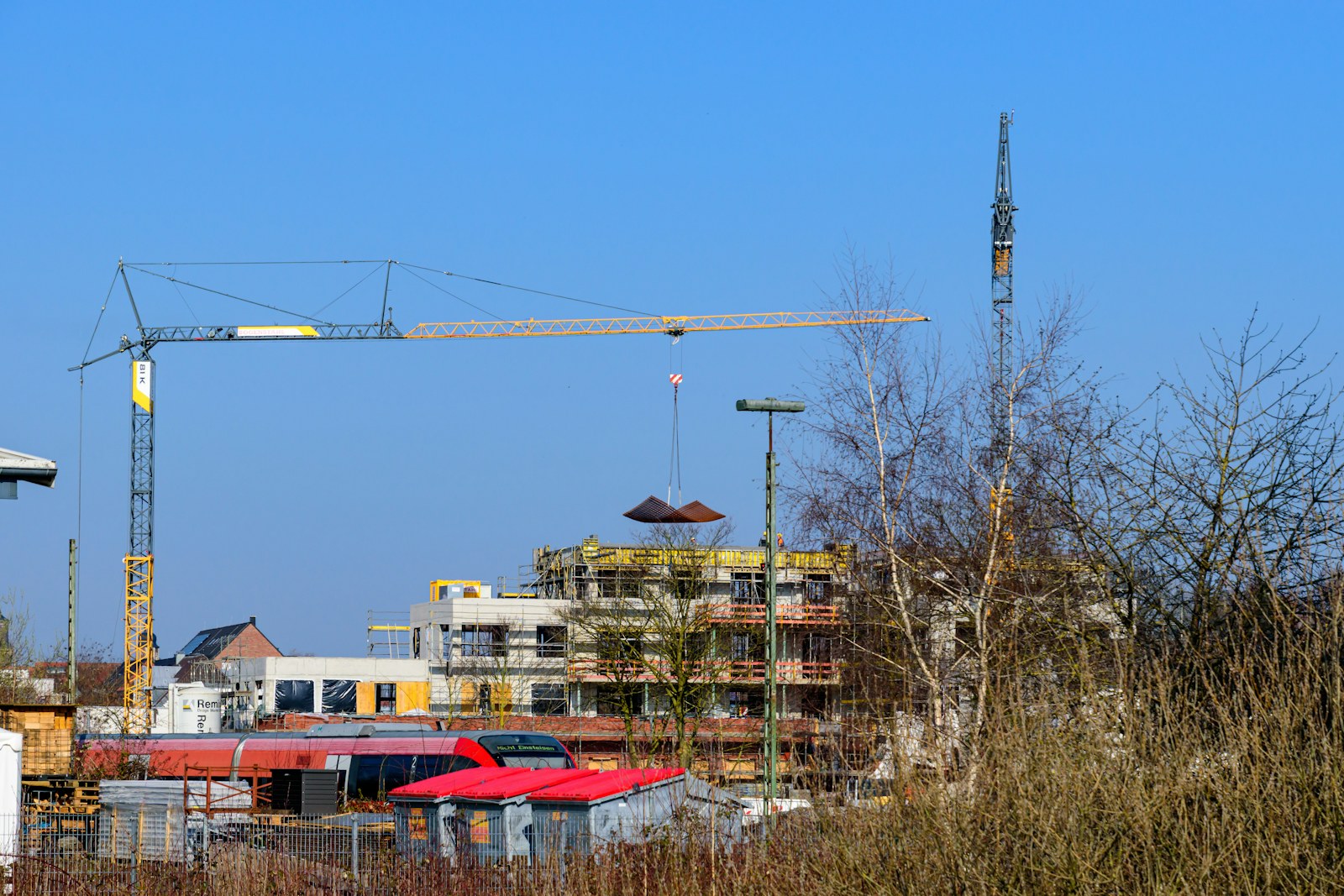
General orientation. Assess the specific project separately. Applies to: Readers preparing a Swedish data-center development file. This is orientation, not a permit decision.
Six evidence packs
Mark every item as documented, reported by a counterparty, an interpretation, or missing. Those states are not interchangeable. “The municipality is positive” is a report. An adopted plan is a document. “Power secured” is an interpretation until the file contains the network owner’s written position or agreement.
Keep the metric boundary visible. Announced site power, facility capacity, occupied IT load and grid capacity answer different investment questions. Do not add them because they share the same unit.
- Land — title, rights, boundaries and surveys.
- Power — network-owner letters, studies and tariff assumptions.
- Plan — detaljplan, översiktsplan and dated minutes.
- Environment — water, fuel, noise, land and neighbours.
- Money — capex split, contingencies and reinforcement payer.
- Delivery — interfaces, long-lead kit and commissioning definition.
Assign the next question
The source owner should be clear. Boverket is the official starting point for planning and building guidance; Naturvårdsverket is a starting point for Environmental Code guidance; Svenska kraftnät’s capacity map is indicative and does not replace a formal connection case. The municipality, network owner or competent environmental authority still holds the project-specific answer.
Use a red-flag rule: if a missing item could change site selection, capex, schedule, operating permission or transaction structure, it cannot remain as a footnote. Put it at the top of the investment summary with a named next action.
- Name the evidence owner.
- Date the latest document.
- Separate source fact from interpretation.
- Record the consequence if the gap stays open.
- Set a next action and decision gate.
The useful output
A good diligence pack is not the longest data room. It is a short register of decisions: what is proven, what is only reported, what is unknown, who must answer and when the answer changes the investment. That structure lets a buyer compare Horndal, Falun, Borlänge, SWE02 or an unregistered plot without treating unlike project stages as equivalent.
Do not turn research incomplete into “not publicly disclosed”. The first means the register has not closed the research task. The second is a claim about the public record. Use the narrower wording that the evidence supports.
Begin with the decision the file must support
Due diligence is not a request to collect every document. It is a way to decide whether a specific action is defensible: buy land, sign a lease, fund design, submit a plan, request a connection, start construction or acquire an operating platform. Write that decision and its date first. The documents needed for a land option are not identical to those needed for energization or customer launch.
Then define the project boundary. Is the file about a campus, one building, a phase, a legal entity or a transaction? A campus-level announcement can cover several halls while a permit or grid letter covers one phase. If the boundary is unclear, capacity, cost, schedule and risk can be double-counted. Put entity, phase and geography on the cover sheet and repeat them in each evidence pack.
Every conclusion should state evidence state, source date, owner and consequence. “Documented”, “reported”, “interpreted” and “missing” are different states. A reported operator target may still be valuable, but it is not the same as a municipal decision or measured operating result. The investment summary should preserve that difference instead of hiding it in footnotes.
- Decision sought and date of the investment gate.
- Entity, phase, campus boundary and geography.
- Evidence state, source date, owner and consequence.
- Documented, reported, interpreted and missing kept separate.
Review the six packs without mixing their boundaries
The land pack should show control, boundaries, access, easements, surveys and phase rights. The power pack should show the relevant network owner, connection point, written position, studies, reinforcements, agreement and tariff assumptions. The plan and permit pack should identify the applicable plan, application scope, decision body, conditions, technical steps and appeal or legal-force status.
The environment pack should be dimension-led: water source and discharge, cooling principle, fuel storage, emissions, noise, land, nature and neighbours. The commercial pack should separate land cost, construction cost, power infrastructure, contingencies, operating assumptions and the party who pays for external works. The delivery pack should describe procurement interfaces, long-lead equipment, acceptance tests, commissioning and the meaning of “complete”.
For every pack, ask whether it is source-complete or merely presentation-complete. A slide can list a network owner without a connection letter, an industrial plan without a boundary extract or a heat-reuse ambition without a contract. Do not punish the missing document by guessing its content. Mark the gap, its impact and the next request.
- Land: control, boundary, access, easements and phase rights.
- Power: owner, point, studies, reinforcement, agreement and assumptions.
- Plan/permit: instrument, scope, decision, conditions and legal status.
- Environment, commercial and delivery boundaries stated explicitly.
Escalate the gaps that can change the decision
A missing item is a red flag when it can change site selection, capital cost, schedule, operating permission, ownership structure or customer commitment. Put that item at the top of the investment summary with a named action. Examples include no evidence of land control, a connection story based only on a map, a plan that does not cover the plot, unclassified cooling water or fuel, an undefined completion date and an ownership transaction without a screening memo.
The red-flag rule is not a score. Do not add five unknowns and call the result medium risk. Explain the mechanism: without the access right, construction traffic may be blocked; without a network-owner position, energization cannot be dated; without an environmental classification, the critical path is unknown; without phase boundaries, capacity may be counted twice. That explanation helps the decision-maker choose the next investigation.
Conflicts deserve their own row. If a company page says one capacity and an annual report says another, keep both with dates and definitions. If a municipal summary and a plan map appear inconsistent, ask the planning office. The newest sentence does not automatically win when the system boundary or authority differs.
- Land control or access not evidenced.
- Grid status inferred from a map or unqualified announcement.
- Plan, environment, completion or ownership scope unresolved.
- Conflicting figures preserved with date and metric boundary.
Write a decision record, not a green checklist
The output should fit the decision without pretending that every question is closed. Use a table with claim, phase, source, date, evidence state, owner, impact and next gate. Add a short narrative for the three facts that matter most and a separate paragraph for what is still unknown. The register can be concise even when the data room is large.
For launch content, the public version must be even narrower. It can teach how to inspect the file and link to official guidance, but it should not expose confidential transaction notes or imply that a private diligence conclusion is a national fact. The public reader should see whether a number is current, announced, historical or superseded and whether the source is an operator statement, authority document or something else.
Close with an explicit handoff. Name who requests the missing paper, what would count as an answer and which decision will be revisited when it arrives. This is the difference between “research incomplete” and “not publicly disclosed”: the former is a work-state; the latter requires that the public record was actually checked.
- Claim, phase, source, date, evidence, owner, impact and next gate.
- Public explanation separated from confidential diligence material.
- Current, announced, historic and superseded context visible.
- Handoff names the requested document and decision to revisit.
Sources
- Planning and Building Act guidance — Boverket, 2026-01-01. Checked 2026-09-10.
- Environmental assessment and permits — Naturvårdsverket, 2026-01-01. Checked 2026-09-10.
- Indicative transmission-network capacity map — Svenska kraftnät, 2026-01-01. Checked 2026-09-10.