Editorial review 2026-09-10 · Jurisdiction: Sweden
The Swedish electricity system
Does a national generation figure tell you whether a hall can connect outside Falun, Gävle or Staffanstorp? It does not. Sweden’s physical system has a transmission network operated by Svenska kraftnät, regional and local networks operated by other companies, and a wholesale market divided into four bidding areas. Generation, transmission, distribution and retail are different roles. A terawatt-hour total from Energimyndigheten is useful context for how the country is supplied. It is not a yes to a specified import capacity at a cadastral unit, and it is not a substitute for the network owner’s dated letter.
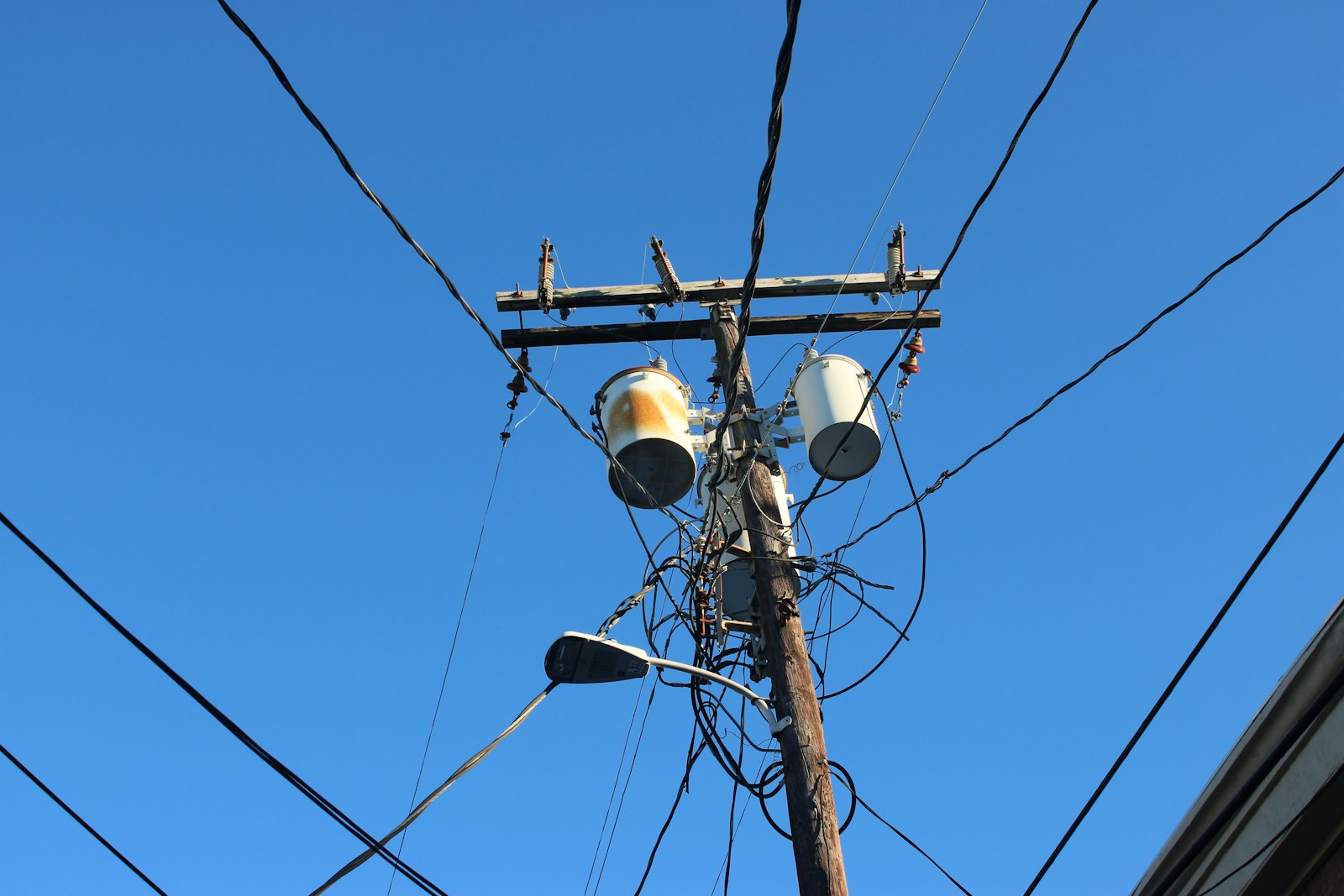
General orientation. Assess the specific project separately. Applies to: Readers assessing Swedish power, grid connection or electricity cost — not a substitute for a network-owner answer.
Reading order
Start with the letterhead, not with the national mix. Ask who generated the sentence you are reading: Energimyndigheten on the system, Svenska kraftnät on transmission, Energimarknadsinspektionen on the market design, a regional or local network owner on the property, a municipality on land use, or an operator on its own campus. Those voices answer different questions. Mixing them produces a brochure that sounds complete and is not.
Then name the network level under discussion — transmission, regional or local — and the voltage you actually need. Large loads may require studies several levels above the plot in Falun, Gävle or Staffanstorp. Only after that split should you read a national energy-mix paragraph, and only as background. Keep the connection file in a separate folder from the generation story.
- Keep the letterhead: system, transmission, market, network owner, municipality, or operator.
- Name voltage and network level before you discuss mix or price.
- Treat national terawatt-hours as context, never as a connection offer.
- Open the grid-connection note once the owner and level are named.
How the Swedish system is split
Svenska kraftnät operates the transmission network and has system-balance responsibilities that sit at that level. Regional and local networks are operated by other companies. A municipality can welcome a project in Boden or Falun and still not own the wires. A retailer can sell energy into SE3 or SE4 and still not grant a connection. The property talks to the network owner at the voltage that matches the requested import.
Those roles are easy to flatten in English because “the grid” sounds like one company. In a Swedish file it is not. Transmission dialogue appears for very large loads. Most halls still have a regional or local counterpart even when a transmission conversation is public. Ask which studies exist at each level and which of them are complete. Time and cost sit in that chain, not only in the last transformer.
The wholesale market is a further split. Four bidding areas make transmission constraints visible in the hourly price. They do not move spare megawatts onto a plot in Luleå or Staffanstorp. Energimarknadsinspektionen’s area pages and Svenska kraftnät’s area-analysis pages describe that market construct. They are the wrong pages to cite as a connection study for a hall that still needs a named network owner.
National energy mix is not a tap
Energimyndigheten’s system pages describe how Sweden is supplied: a generation mix, interconnections, and the physical networks that move energy. That is the right place to understand why hydropower in the north and consumption further south are a recurring theme in Swedish energy writing. It is the wrong place to conclude that a hall outside Gävle or Falkenberg can be energized next year.
Local connection offers are written by the network owner after studies that may include reinforcements on the owner’s network and, for some loads, further up toward Svenska kraftnät. Those studies are specific to a point of connection and a requested import. A national surplus hour does not cancel a local constraint, and a constrained hour in SE4 does not by itself prove that a Staffanstorp plot has no path — it proves that price formation saw a constraint.
What named primary sources show
Energimyndigheten’s note on the Swedish electricity system is the starting page for actors and physical structure. It supports the split between generation, networks and use. It does not publish a plot-level spare-megawatt register. Svenska kraftnät’s indicative transmission-network capacity map is a national layer with an explicit caveat: it does not replace formal connection and it does not show underlying-network capacity.
Energimarknadsinspektionen’s bidding-area pages explain SE1–SE4 as a wholesale-price construct. They do not allocate capacity to Luleå, Boden, Stockholm or Malmö as cities. Operator pages sit in a third folder. Meta’s Luleå careers page describes an operator campus from 2013, outdoor-air cooling and local hydropower; current megawatts are not on that cited page. Microsoft’s 16 November 2021 Sweden-region materials name Gävle, Sandviken and Staffanstorp and do not state facility megawatts.
Those operator rows show that halls exist in more than one bidding area and at more than one network level. They do not let a reader infer the spare position on the next cadastral unit. AWS Europe (Stockholm), opened 12 December 2018 on the cited launch pages, does not even publish a municipality. Absence of a number is stored as unknown, not as zero.
Common misreads
The first misread is to treat “Sweden has hydropower” as a connection answer for a hall in Falun or Staffanstorp. Hydropower is part of the national mix described on Energimyndigheten’s pages. The tap is a different file. The second is to treat a retailer contract as if it were a network agreement. Energy can be purchased from a supplier that has no authority over the wires to the building.
The third is to treat a municipal welcome in Boden or Gävle as if the municipality owned the regional network. Planning and electricity are parallel tracks. The fourth is to treat Svenska kraftnät’s map colour as an allocated megawatt figure. The authority says the map is indicative and silent on underlying networks. The fifth is to copy an operator campus story — Meta in Luleå, Microsoft across Gävle, Sandviken and Staffanstorp — onto a neighbouring plot as if spare power travelled with the brand.
What to ask next
Ask the network owner for the latest written position on the requested import, voltage and point of connection. Ask which studies exist at local, regional and — if relevant — transmission level, and which of them are finished. Ask the municipality only about the plan and the political file, not about spare megawatts it does not own. Ask Energimyndigheten’s pages only for system context, not for a plot answer.
If an operator brochure is in the pack, ask which sentences are about that operator’s own halls and which, if any, are about the public networks. Meta’s Luleå page and Microsoft’s Sweden-region page are operator statements. They are not Svenska kraftnät connection offers. Write the answers with dates. If a counterpart will not put a number on paper, record the gap instead of filling it from the national mix.
- Who is the network owner at the voltage you need?
- Which studies exist at each network level, and which are complete?
- Is the latest paper an inquiry, a reservation, or an agreement?
- Which sentences in the pack are national mix, and which are site-specific?
What this does and does not prove
This note proves that the Swedish electricity system is a set of roles and network levels, and that a national generation figure cannot close a connection question in Falun, Luleå or Staffanstorp. It proves that Energimyndigheten, Svenska kraftnät, Energimarknadsinspektionen, network owners, municipalities and operators publish different kinds of sentences. It proves that the indicative transmission map is framed by its publisher as non-substituting and silent on underlying networks.
It does not prove how many megawatts are spare at any named plot. It does not prove a reliability score for SE1 or SE4. It does not prove a price. It does not convert Meta’s Luleå hydropower description, Microsoft’s named municipalities, or AWS’s Stockholm-region opening into a public capacity register. Those are dated operator facts with the limits of their own pages. A connection answer still has to be asked for.
Sources
- The Swedish electricity system — Energimyndigheten, 2026-01-01. Checked 2026-09-10.
- Indicative transmission-network capacity map — Svenska kraftnät, 2026-01-01. Checked 2026-09-10.
- Electricity bidding areas — Energimarknadsinspektionen, 2026-01-01. Checked 2026-09-10.
- Welcome to Facebook Luleå Sweden — Meta Careers, 2013-06-12. Checked 2026-09-10.
- Microsoft opens its sustainable datacenter region in Sweden — Microsoft, 2021-11-16. Checked 2026-09-10.
- Now Open – AWS Europe (Stockholm) Region — Amazon Web Services, 2018-12-12. Checked 2026-09-10.