Editorial review 2026-09-11 · Jurisdiction: Sweden (PBL, Environmental Code and related procedures)
Starting and completing construction
What event does the date actually describe: permit, lawful start, technical completion, occupancy or commercial IT availability? Swedish procedure can include technical consultation, a control plan, startbesked and later slutbesked. These are separate gates. A press release saying “permit granted” is not proof that works could lawfully start or that a hall is ready for customers.
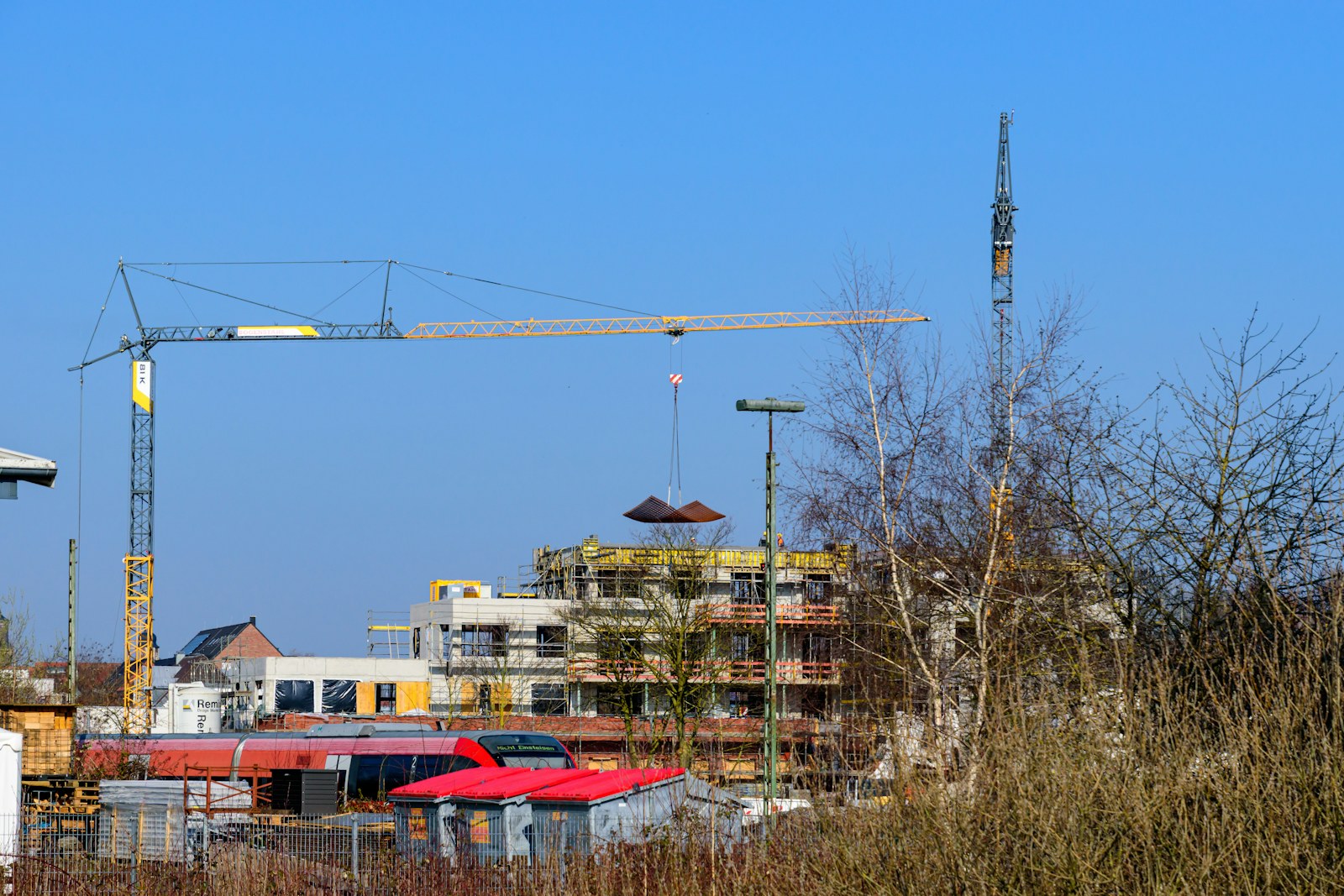
General orientation. Assess the specific project separately. Applies to: Readers preparing a Swedish data-center development file. This is orientation, not a permit decision.
Keep the notices distinct
Startbesked is the gate that matters before the relevant works begin; slutbesked is a later close-out step. The exact documents and conditions depend on the case and the municipality. Keep the decision, date, conditions and responsible party together rather than summarising the entire sequence as “construction approved”.
Commercial readiness comes later still. A building can be physically complete while energization, cooling tests, security controls, customer fit-out or IT commissioning remain open. Define the project’s own completion vocabulary before comparing it with Horndal, Falun or an operator announcement.
| Label | What it can mean | Do not infer |
|---|---|---|
| Bygglov | Decision on the defined building application | Grid or environmental clearance |
| Startbesked | Permission to begin the relevant works | Operational hall |
| Slutbesked | A later completion/close-out decision | Occupied IT load |
| Commissioning | Technical testing defined by the project | Municipal permit |
Evidence to attach
For each milestone, attach the source document and state whether it is a municipal decision, a contractor certificate, an operator target or an internal gate. Boverket’s PBL guidance is the official sequence reference; it does not turn an operator target into a decision.
If the project has several halls or phases, give each phase its own status. “Campus open” may hide that one building is operating while another remains a development target. The register’s Falun record uses that kind of separation: commissioned C/D, later E/F expectations and a separate available-power claim are not one date.
- Name the permit and its scope.
- Attach technical-consultation and startbesked records.
- Record conditions and outstanding controls.
- Separate physical completion from energization and IT commissioning.
- Give each hall or phase its own status and date.
The next question
Ask the project owner to replace every unqualified “complete” or “open” with a named event, date and source. If the source is not available, retain the weaker status. A clear unknown is more useful to an investment decision than a precise-looking milestone with no document.
Name the gate after the permit
A permit decision is the start of a more specific control sequence, not the end of the project file. Read the decision, its drawings and its conditions together. Identify what the decision actually covers: the hall, foundations, external works, plant, access, demolition or another defined measure. Then identify the remaining technical consultation, control-plan and startbesked steps for the relevant works. The exact route depends on the case and the local authority; the safe editorial statement is to name the document obtained rather than assume the next one.
The Swedish words matter because each describes a different event. Bygglov is a decision on an application. Tekniskt samråd is a forum for technical matters and planning of control. A control plan describes how important controls are organised. Startbesked is the later permission to begin the relevant works. None of those labels means the hall is energised, commissioned or available to customers. Keep the original decision title and date beside any English translation.
If the application changes after the decision, stop and define the change. A larger generator yard, a new cooling arrangement, a different façade or a changed access road may affect the scope. Do not assume that a project can absorb a material design change under the old headline. Ask the building office whether a new application, amendment or other handling is required and record the answer as guidance until a formal document exists.
- Decision scope: building, site works, plant and access.
- Technical consultation, control plan and startbesked status.
- Conditions, responsible parties and documents still outstanding.
- Material design changes that may reopen the question.
Define completion by phase
A campus can have several halls and systems at different stages. Give each phase its own start, construction, completion, energization and commissioning fields. “The campus is open” may mean that one building accepts customers while another is still a land or construction announcement. A single project-level label hides the dependency that matters to a buyer. The register should preserve the phase boundary even when the operator uses one commercial brand for the whole site.
Physical completion, legal completion and commercial readiness are not synonyms. A contractor may certify a package as complete while punch-list work remains. A municipality may issue a later close-out document while the network owner has not energised the connection. A hall may have power while the cooling test, security review or customer fit-out is incomplete. Use a named event and a source for every date, and state whether the date is observed, reported, targeted or contractual.
The same discipline applies to capacity. A completion date does not turn announced site power into occupied IT load. A commissioning test does not prove a long-term operating level. If a later phase is expected to bring the campus to a total, keep that expectation separate from the capacity of the buildings already described as operating. The source may support a timeline without supporting a new MW observation.
- One status and source per hall or phase.
- Physical completion, startbesked, energization and commissioning separated.
- Target, estimate, contract milestone and observed event labelled.
- Campus totals kept separate from phase capacity observations.
Attach evidence to every milestone
For a defensible timeline, keep the source document next to the event it supports. A municipal decision should retain the issuing body, decision date, case scope and conditions. A contractor or operator statement should retain the publisher, publication date and the wording that makes the event a report rather than an independent observation. A site photograph can show visible progress, but it does not replace a dated decision or a commissioning record.
Build a milestone table that can be read by someone who did not attend the project meetings. Useful columns are phase, event, event date, publication date, source, evidence state, responsible counterpart and next check. Add a note when the date describes a target or when the source uses an undefined word such as “complete”, “open” or “ready”. Those words need a project-specific definition before they can be compared.
When a source is unavailable, lower the claim instead of removing the event history. “The operator reported a June groundbreaking” is stronger than silently omitting the date and weaker than a verified construction record. “The register has not obtained the municipal startbesked” is narrower than “the project could not start”. Clear uncertainty lets later editors update the right row without rewriting the whole profile.
- Decision body, scope, date and conditions for municipal documents.
- Publisher, date and exact wording for operator or contractor reports.
- Event date separated from publication date.
- Next check named when a source is missing or a term is undefined.
Make the handoff useful
The completion file should help the next person ask a sharper question. For each open item, name the counterpart: building office for a permit scope, municipality for a startbesked or close-out document, network owner for energization, contractor for the test record, operator for customer availability and specialist for commissioning criteria. A project manager coordinating the tracks does not become the authority for any of them.
At handover, reconcile the public profile with the underlying phase table. If a new source confirms one building, update that phase and its events rather than promoting the entire campus. If a target date passes without a source, do not automatically mark the event failed or completed. Mark the target as past and ask for a new primary record. A missed public target is information about uncertainty, not permission to invent the outcome.
This approach also protects the reader from false precision. The most useful completion statement may be “C and D are reported commissioned as of the annual report; E and F remain a company expectation; current IT load is not stated.” That sentence is longer than “Falun complete”, but it tells a decision-maker which document to request next.
- Name the counterpart for every remaining gate.
- Update the confirmed phase, not the whole campus by association.
- Keep passed targets visible until a later source explains the outcome.
- Use the narrowest completion statement supported by the source.
Sources
- Planning and Building Act guidance — Boverket, 2026-01-01. Checked 2026-09-10.