Editorial review 2026-09-10 · Jurisdiction: Sweden examples
Heat reuse
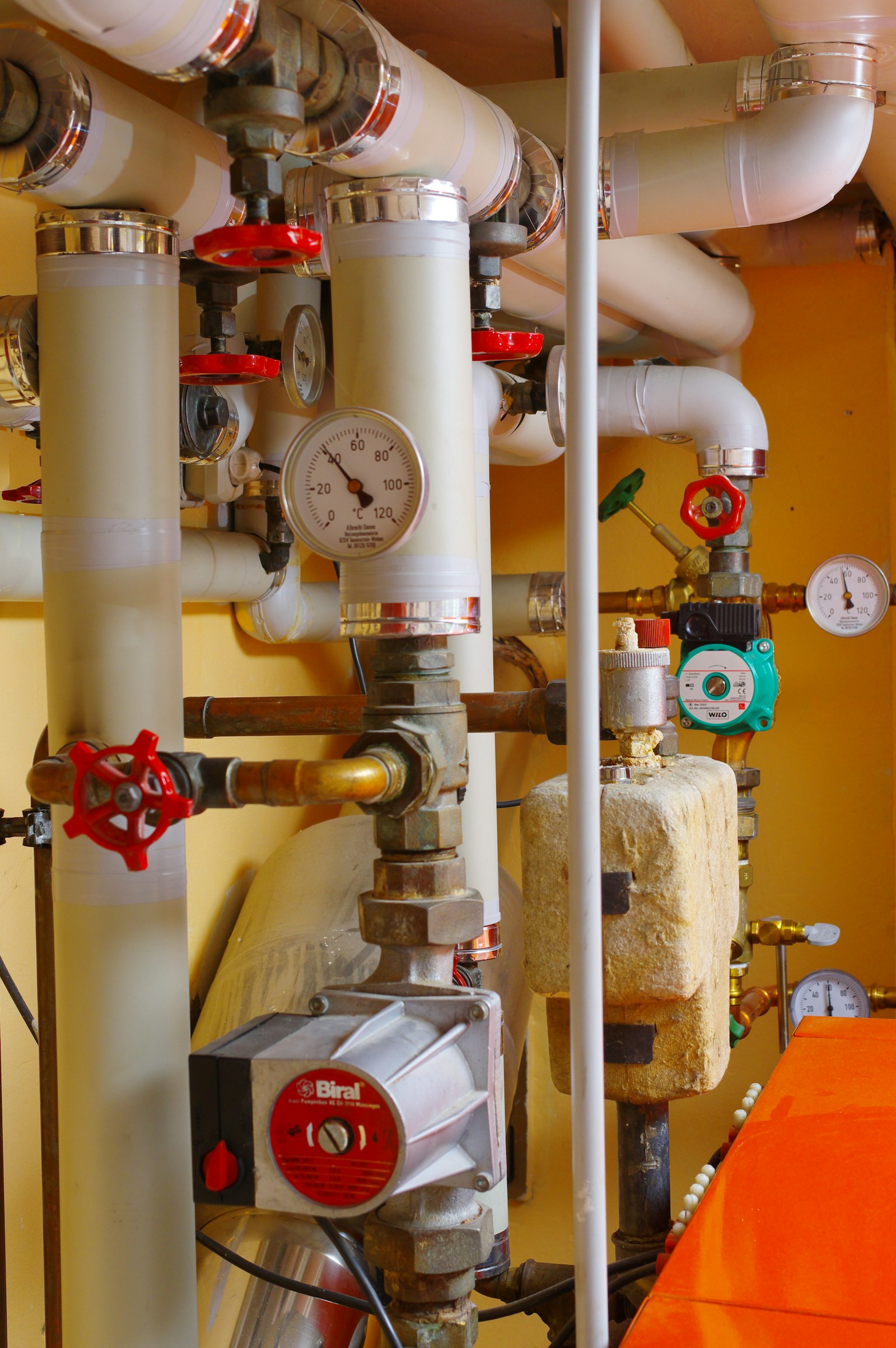
Is this Swedish hall’s residual heat prepared, intended, contracted, or delivered — and to which named buyer? Heat reuse needs a temperature, a pipe, a counterparty and a commercial state. Prepared connections are common in Stockholm operator copy: atNorth SWE01 and Conapto mention recovery toward Stockholm Exergi. GleSYS published a 1 October 2020 start of delivery to Falkenberg Energi. EcoDataCenter describes recovery with Falu Energi & Vatten. Those are different evidence states in different municipalities. None of them is a national heat market, and none of them publishes a national delivered-heat total. A valve on a drawing is not a megawatt-hour.
General orientation. Assess the specific project separately. Applies to: Readers testing heat-reuse sentences.
Reading order
Read a heat-reuse sentence from the plant outward. First ask what temperature the cooling loop can actually offer, and in which season. Then ask whether a pipe or a valve exists on the plot. Then name the buyer — a municipal energy company, a nearby industry, or an unnamed future network. Then classify the commercial state: prepared, letter of intent, contract, or delivered. Only the last state supports a delivery claim.
Do not start with a national potential. Sweden has many district-heat networks, each with its own temperature, capacity and owner. Stockholm Exergi, Falkenberg Energi and Falu Energi & Vatten are different counterparties. A sentence that works in Kista does not transfer to Falkenberg. Annual megawatt-hours after a delivery start are a later measured cell. If that cell is empty, say so.
- Prepared — pipes or valves exist.
- Intent — a letter.
- Contract — commercial terms.
- Delivered — a dated start or a measured volume.
How heat reuse works in Swedish files
Technically, residual heat is a cooling-plant output. Air-side rejection can leave the heat too cool or too scattered for a district network. Liquid loops and heat pumps can raise temperature so a utility will even talk. That conversation is still not a contract. The utility must have a winter and summer load, a pipe in reach, and a price that covers heat pumps, backup and interruption. A data-centre developer does not own that network. The municipal or commercial heat company does.
Geographically, heat is more local than wholesale electricity. Bidding areas SE1 Luleå, SE2 Sundsvall, SE3 Stockholm and SE4 Malmö move a power price. They do not move a district-heat molecule from Luleå to Malmö. A hall in SE3 can sit next to a dense Stockholm network and still lack a signed offtake. A hall in SE4 can deliver into a smaller coastal network, as GleSYS described in Falkenberg, without creating a national market. Meta’s Luleå hydropower and outdoor-air description does not, on the cited page, document a heat sale.
Commercially, the four states exist because Swedish heat companies are counterparties, not scenery. A prepared connection can be a valve and a press sentence. A letter of intent can expire. A contract has volume, temperature, seasonality and stop conditions. Delivered heat has a start date or a measured volume. DataCenterSweden treats delivery as documented when a dated source says delivery started or reports a measured volume. Operator pages that describe recovery capability stay in the prepared or intended column until that dated source appears.
Legal tracks sit beside the pipe. Boverket’s planning path may see outdoor heat-exchange equipment as part of the building. Naturvårdsverket’s guidance appears if the plant changes an environmental investigation. The network owner on the electricity side is a different company from the heat buyer; Ellevio and Falu Energi & Vatten appear in EcoDataCenter power copy as electricity counterparties, which is not by itself a heat-delivery proof. Skatteverket does not turn sold heat into a PUE. Svenska kraftnät’s capacity map does not show district-heat headroom.
What named primary sources show
GleSYS’s 1 October 2020 release is the dated delivery-start source in this set. It said surplus energy from the new Falkenberg hall had begun to become district heat for Falkenberg Energi, and it listed 3 MW utility power at completion. The later operator page states 5 MW, PUE 1.2 and district-heat recovery. Measured annual megawatt-hours after that October date are not in the cited pages. The register therefore marks a reported delivery start, not a multi-year volume.
atNorth’s SWE01 page describes heat recovery with Stockholm Exergi together with liquid cooling, design PUE 1.2 and 12 MW site power. Heat actually delivered versus recovery design is not quantified on that page. Conapto’s opening materials for Stockholm 4 South, read with related operator wording, mention heat recovery to Stockholm Exergi. That is operator heat wording for a south Stockholm campus stated at 24 MW with Stockholm 2 South. It is not stored here as a dated delivery start comparable to Falkenberg 2020.
EcoDataCenter describes recovery with Falu Energi & Vatten. A company press item also describes securing 80 MW future power supply with Falu Energi & Vatten and Ellevio. That power sentence is electricity, filed as operator-reported and not as a reviewed grid agreement. It is not a heat-volume figure. The 2025 annual report’s 41 MW and 65 MW campus sentences are likewise capacity rows. Heat delivered versus heat-recovery design remains a stated knowledge gap for Falun.
Meta’s Luleå page describes outdoor-air cooling and hydropower and does not, in the cited text, document a district-heat delivery. evroc’s 3 February 2025 notice designs for up to 16,000 GPUs without megawatts and without a heat-buyer sentence in that notice. Microsoft’s community PDF is a local-impact source, not a heat-delivery source. No source in this set publishes a national total for data-centre heat delivered in Sweden.
Common misreads
The first misread is to count designed heat as sold heat. A recovery mention with Stockholm Exergi or Falu Energi & Vatten is not a megawatt-hour. The second is to treat the 2020 Falkenberg start as a Swedish template or as a continuing annual volume. It is one dated start in one town. The third is to add EcoDataCenter’s power and campus megawatts into a heat figure. Those rows are electricity capacity, and they are not added even to each other.
The fourth misread is to publish a national heat-market total from a handful of operator sentences. This set has one documented delivery start and several recovery mentions. That is not a market size. The fifth is to treat heat reuse as proof of a low PUE, or a low PUE as proof of sold heat. Operator PUE figures on the energy-efficiency page remain separate, from different years and methods, and are not a league table.
- Counting design heat as sold heat.
- Treating Falkenberg 2020 as a national model or an annual volume.
- Inventing a Swedish heat-market total.
- Turning Exergi wording into a delivery certificate.
- Using heat reuse to rank operator PUE figures.
What to ask next
Ask for the loop temperature, the seasonality, the named buyer, and the latest paper — drawing, letter, contract or delivery note — with a date. Ask whether any measured megawatt-hour figure is published after the start date. Ask who pays for heat pumps and who takes interruption risk. If the buyer is unnamed, the commercial state cannot be higher than intended.
Then open the cooling page for the plant that creates the heat, the local-impact page for neighbours on the other side of the fence, and the energy-efficiency page so PUE is not used as a heat certificate. Ask the municipality whether the detaljplan actually allows the outdoor equipment. If the operator will not name a volume, record the gap rather than estimating a town’s district-heat take.
- Temperature, season, named buyer, dated paper.
- Prepared, intent, contract, or delivered?
- Any measured MWh after a start date?
- Who owns interruption and heat-pump cost?
- Which cell would you need in order to stop calling this a capability?
What this does and does not prove
This page proves that heat-reuse sentences in the reviewed set fall into different evidence states. It proves that GleSYS published a 2020 delivery start to Falkenberg Energi, that atNorth and Conapto published Exergi-related recovery wording, and that EcoDataCenter published recovery wording with Falu Energi & Vatten. It proves that annual volumes after those sentences are mostly unpublished in the cited pages.
It does not prove a Swedish data-centre heat market size. It does not prove that Stockholm halls deliver heat, only that named operators mention Stockholm Exergi. It does not convert Falun’s 80 MW power sentence into heat. It does not treat Meta Luleå or evroc Arlandastad as heat-delivery case studies on the cited pages. It does not improve anyone’s PUE.
Unknown delivered heat stays unknown. Point to the named source gap rather than filling it from a brochure. A later primary source may add a contract date or a measured year. Until it does, prepared and delivered remain different words, Stockholm Exergi wording remains wording, Falkenberg’s 2020 start remains one dated claim, and a national delivered-heat total remains unpublished here.
Sources
- Surplus energy from a new data center is transformed into district heating — GleSYS / Mynewsdesk, 2020-10-01. Checked 2026-09-10.
- GleSYS Falkenberg data center — GleSYS, 2026-01-01. Checked 2026-09-10.
- Stockholm Data Parks — Stockholm Data Parks, 2026-01-01. Checked 2026-09-10.
- SWE01 Stockholm metro site — atNorth, 2026-01-01. Checked 2026-09-10.
- Conapto opens Stockholm 4 South — Conapto / Mynewsdesk, 2024-09-05. Checked 2026-09-10.
- EcoDataCenter in Falun secures a future power supply of 80 MW — EcoDataCenter, 2020-01-01. Checked 2026-09-10.
- EcoDataCenter 1, Falun — EcoDataCenter, 2026-01-01. Checked 2026-09-10.
- EcoDC Holding AB annual report 2025 (English) — EcoDC Holding AB, 2026-04-01. Checked 2026-09-10.
- Welcome to Facebook Luleå Sweden — Meta Careers, 2013-06-12. Checked 2026-09-10.
- evroc finalizes land purchase in Arlandastad, Stockholm — evroc, 2025-02-03. Checked 2026-09-10.